Somebody new starts next week and there's a job only you know how to do. You've done it a hundred times, it's entirely in your head, and it's clearly time to write it down properly. Ten minutes, tops.
Then you open the document. Hold on, let me type that bit differently. Let me add a screenshot. Let me do this, let me do that. Oh, actually, no, it's probably not quite like that. An hour later you have four steps and a slightly worse mood.
That happens because writing a procedure asks you to do two jobs at once. Perform the task from memory, and document it as you go. Each one keeps interrupting the other, and most of us don't actually know the order of our own steps until we're in the middle of doing them.
So instead of writing the procedure, do the procedure with the recorder running. The document stops being the thing you author and becomes the thing that falls out the other end.
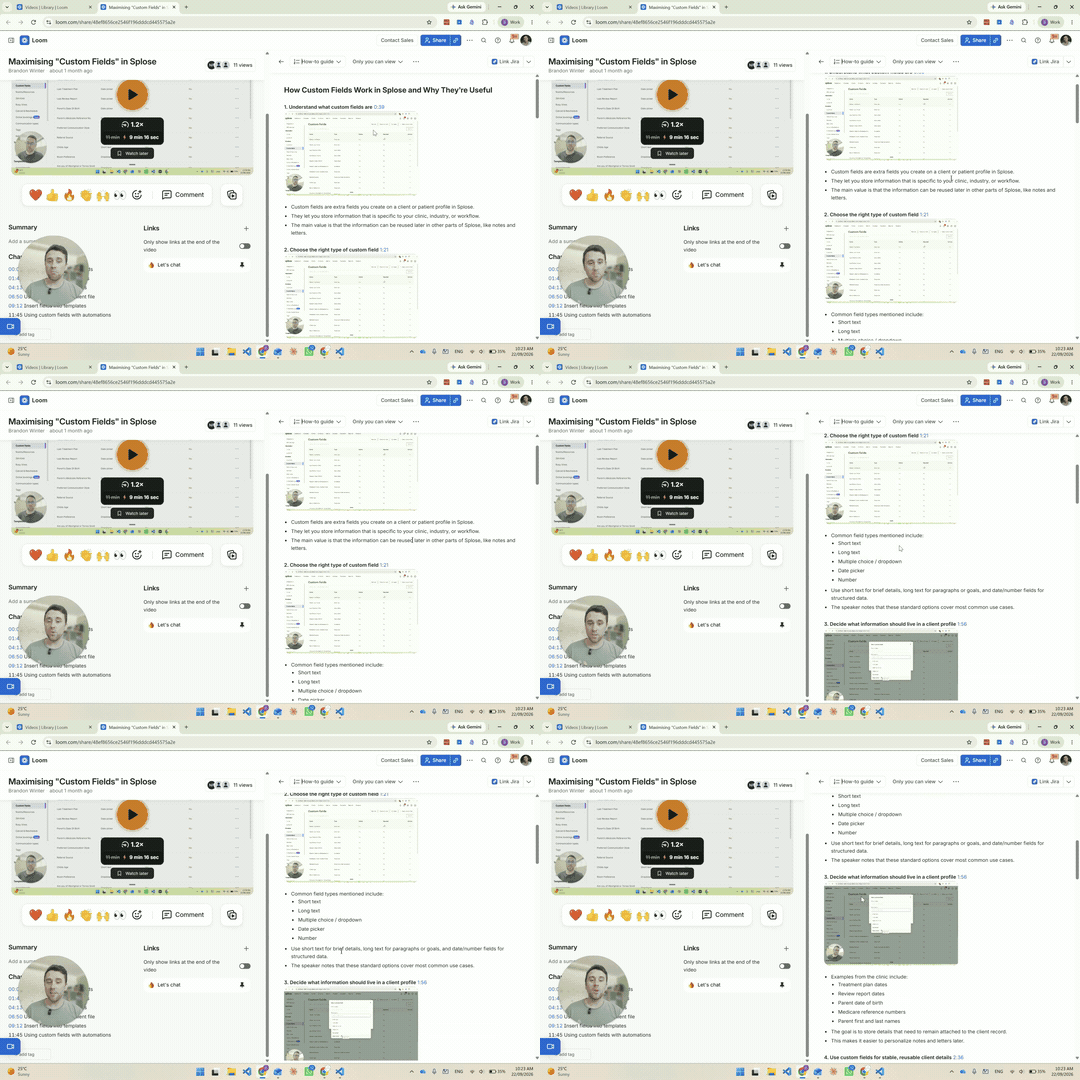
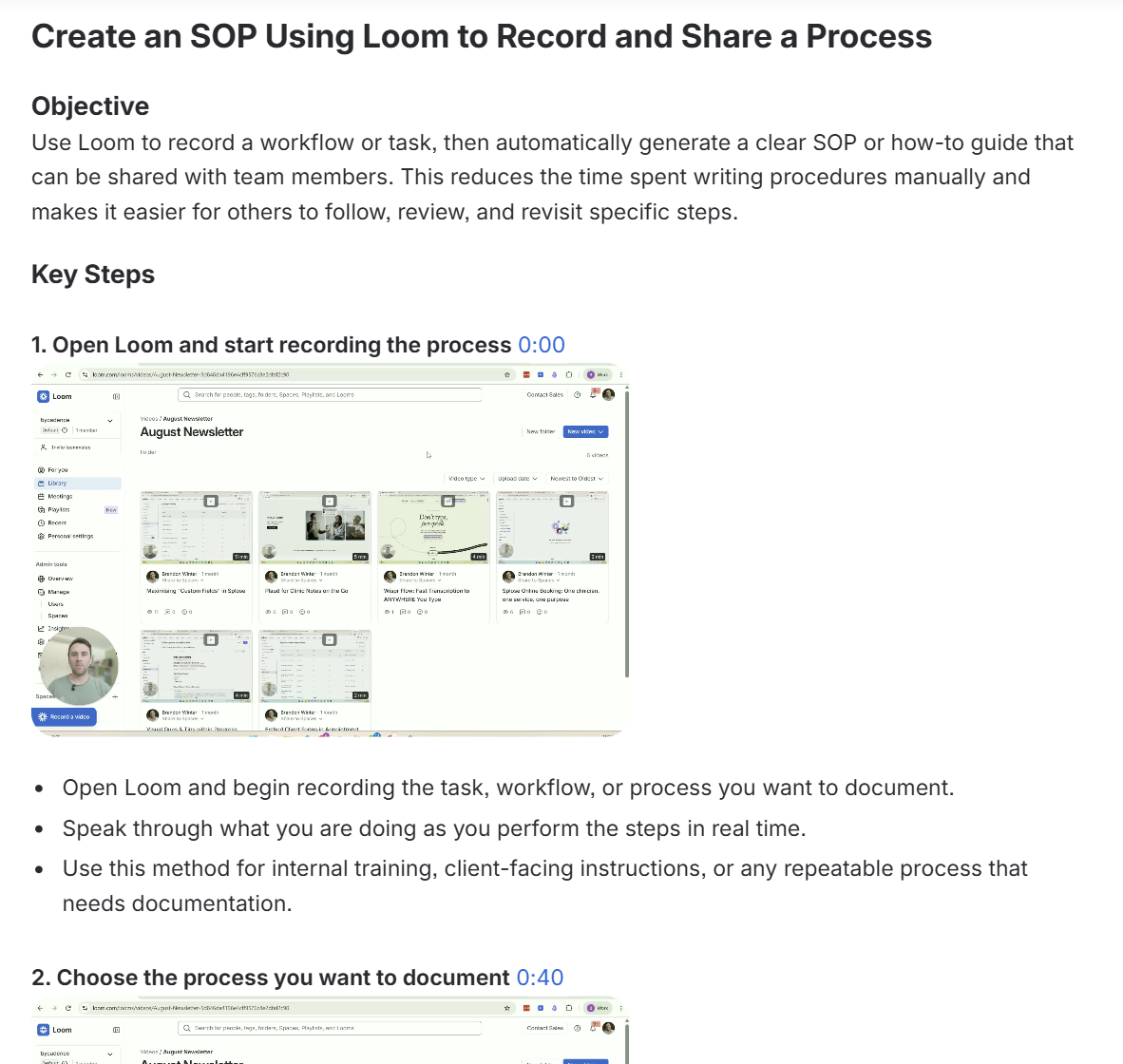
That's the six minute video at the top of this page, and the guide Loom wrote from it. Numbered steps, a screenshot per step pulled out of the video, and a timestamp beside each one. Nothing in it was written by hand. It's the same argument as talking instead of typing: getting something out of your head is much easier when you're not formatting it at the same time.
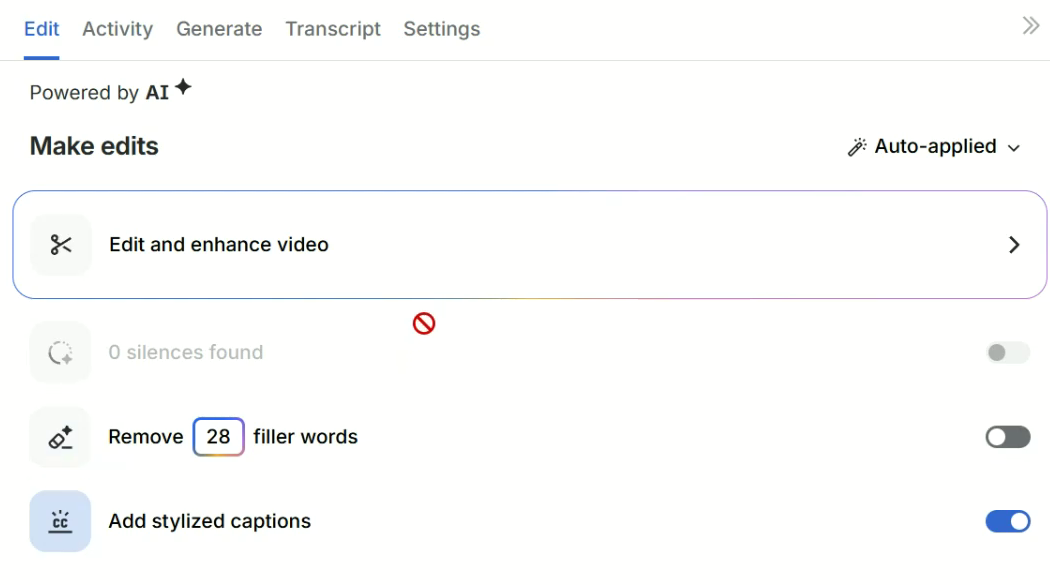
This is the bit people assume it's for. You can strip out every um and ah, count your filler words, add captions, speed the whole thing up. I generally don't bother, because the things that make us all human are not the reason the video is slow.
The value is one tab across, and it holds for far more than onboarding. The workflow only one person knows. The automation nobody wants to touch because nobody remembers how it was built. The thing a client has asked you to explain for the fourth time this month. Every one of those is faster shown than written, and every one of them currently costs you the same hour.
I use it for client walkthroughs, for our own team at the clinic, and for showing my mum how to use her computer. Same shape every time.
Who has to answer the question
Once the guide exists, so do chapters, and the chapters are links back into the video.
That quietly changes something. Somebody reads step four, doesn't follow it, and instead of coming to find you they click the step and watch the thirty seconds where you actually did it. The document answers its own follow-up questions, which is the thing a written SOP has never once managed.
Two honest limits. It's a paid platform, and the AI features sit on its top tier, so this is a real line item rather than a free win. And what comes out is a good first draft, not a finished SOP. Read it before you send it to anybody, because it faithfully writes down what you said, including the part where you changed your mind halfway through.
Pick the procedure you've been meaning to document since about March. Don't write it. Open the thing, hit record, do the job and talk while you do it. You'll have a draft before you'd have finished the first paragraph.
Common questions
Yes. Record the walkthrough, then use the AI generation to produce a how-to guide with numbered steps, screenshots pulled from the video and a timestamp beside each step. Treat it as a first draft that needs a read rather than a finished document.