This is technically another custom-field example, but I think it deserves its own section. There's plenty of conversation at the moment about AI consent, privacy and appropriate use in healthcare.
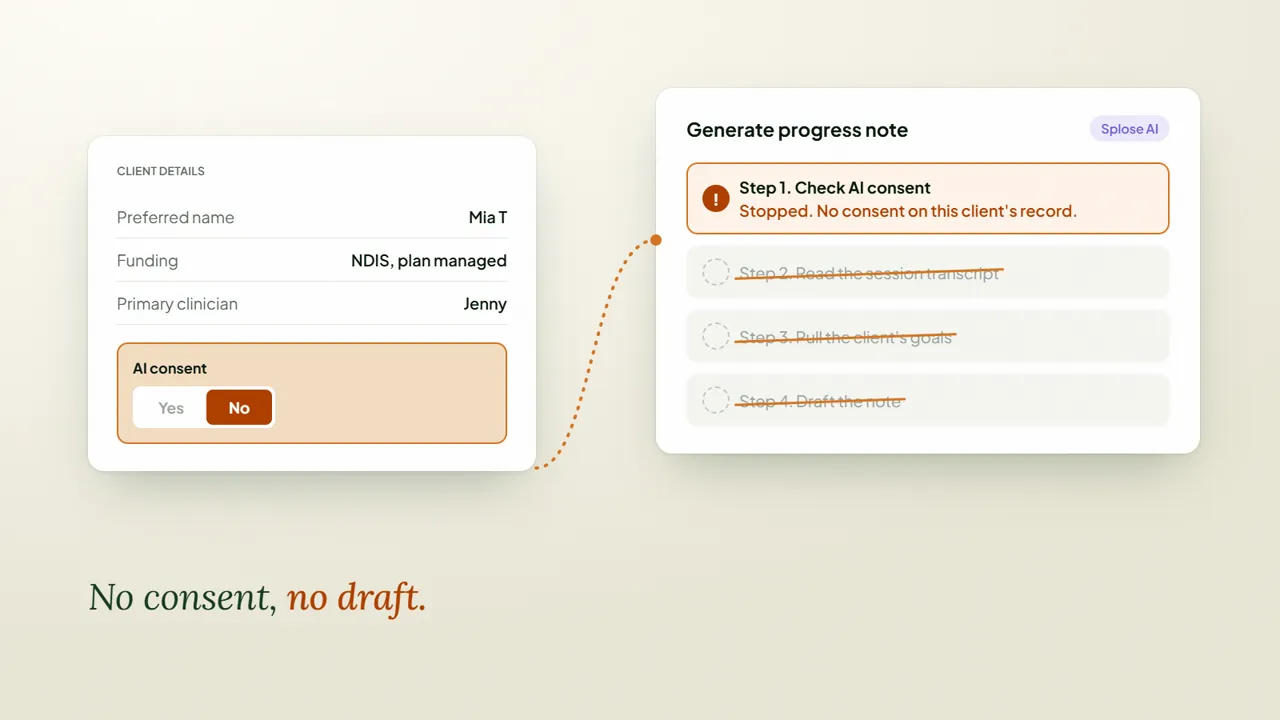
One thing we didn't want was for consent to become something that was technically captured during onboarding but relied on a clinician remembering to check it six months later. So our AI consent lives as a custom field on the client record. During onboarding, the family actively acknowledges how we've described our use of AI and either consents or doesn't.
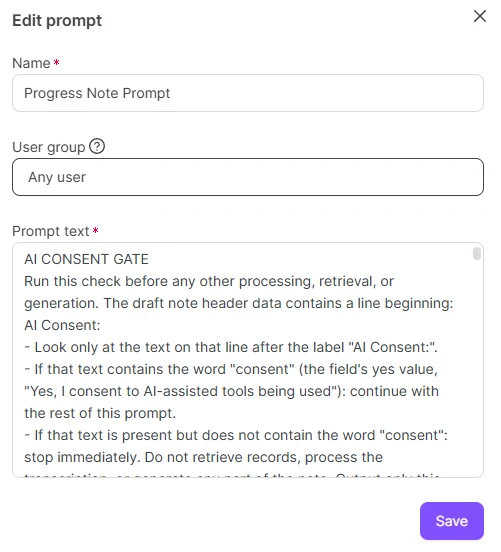
Then we use that field again. Every AI prompt we've built inside our process starts by checking it. If consent isn't there, the prompt stops. No summary. No drafting. No "the clinician probably checked this earlier". It simply says AI can't be used for that client.
A policy sitting somewhere saying "check consent before using AI" still creates a job for a person to remember. If the system already knows whether consent exists, why not make the system enforce the rule? That's a useful way to think about a lot of clinic processes, not just AI: