Most weeks somebody in the Splose community group asks how to do something the platform doesn't quite do. Report on this in that shape. Get a form on the website to create a client. Stop re-typing the same thing into a second system. And somebody replies "you could do that with the API", and the thread goes quiet, because nobody's sure what that means or whether it's for them.
I'm not going to cover how to build any of this. It does get technical, and it needs somebody with enough understanding, or enough patience, or enough confidence with an AI tool to go back and forth until it works. What I want to do is show what's possible, using what we've actually built in our own clinic, so you can look at your own systems and ask what's still being done by a person that doesn't need to be.
The door the other software uses
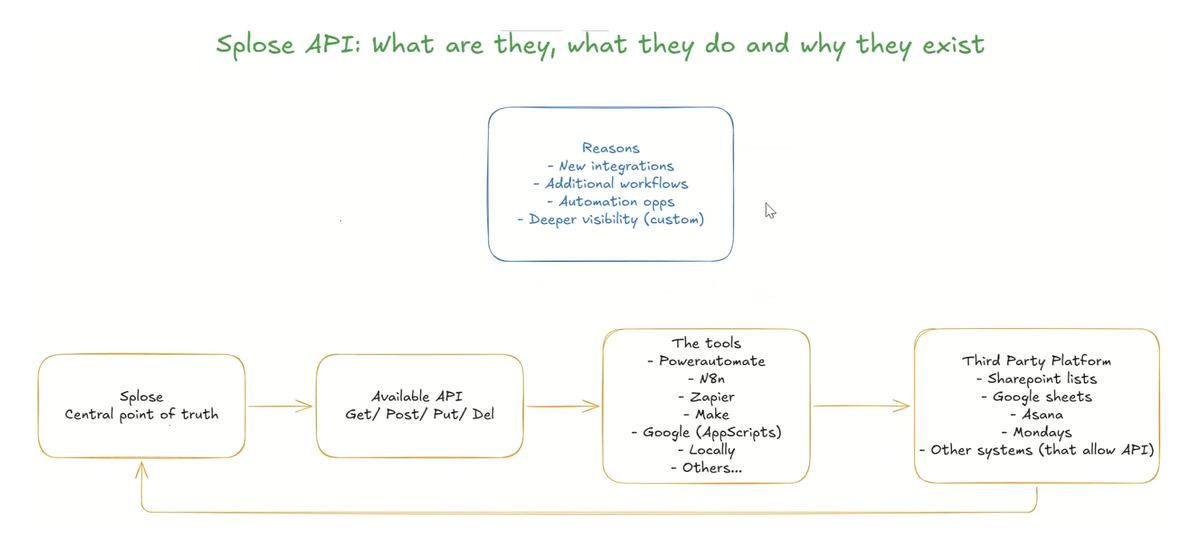
When you log into Splose in the morning, you're using the interface built for you. An API is a second front door to the same building, built for other software. It lets another platform read from Splose and write to Splose without a person clicking anything. Same information, same rules about who's allowed in, but the visitor is a computer rather than a receptionist.
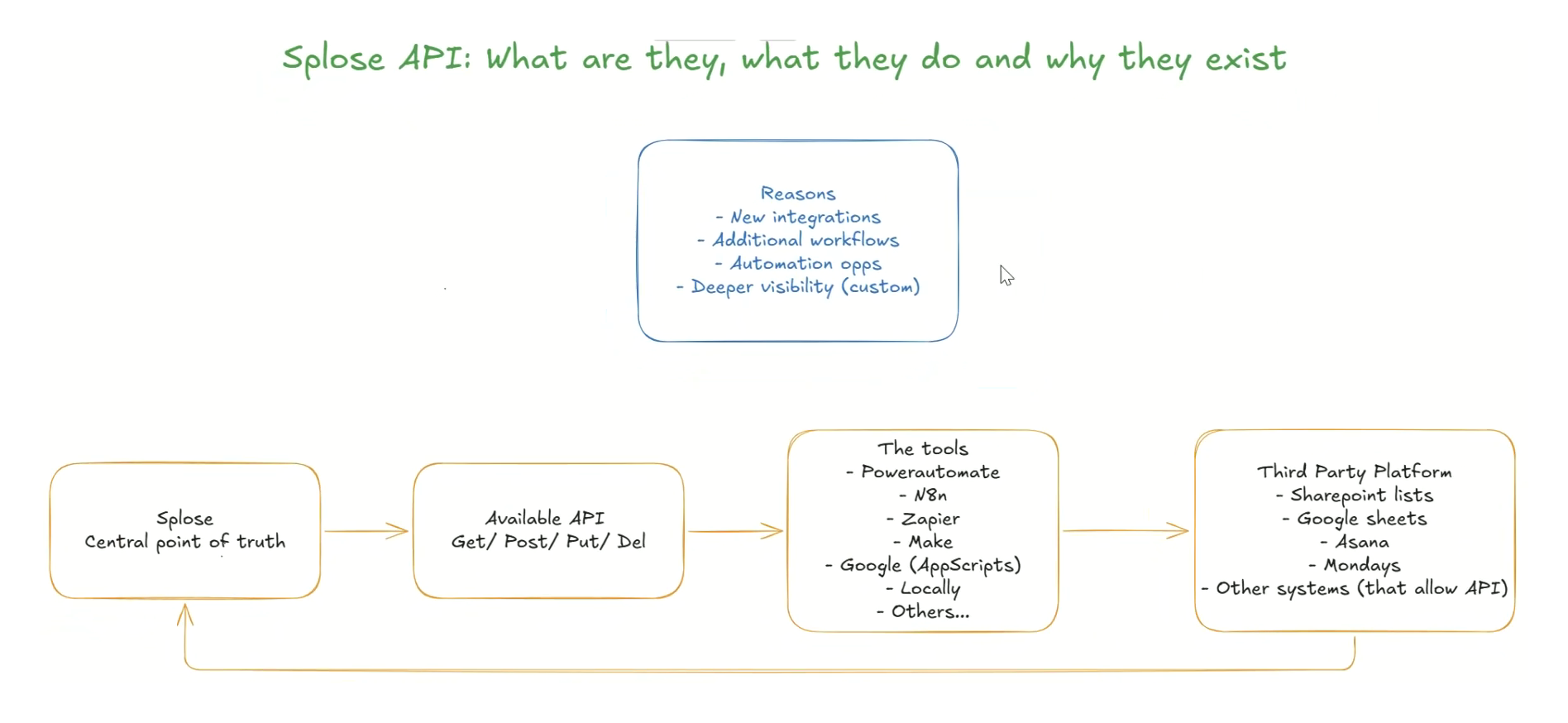
API's in the example can do four things: get information out, create something, update something, and in a very small number of places delete, which Splose deliberately keeps limited. Every entry in Splose's developer documentation is one of those, and the list keeps growing. Practitioner availability was added recently, which is the piece an AI phone-answering service needs before it can offer a caller a time.
It isn't a Splose specific feature. Most software you pay for has a door like this, and if two platforms both have one, they can talk to each other.
What we've built on it
Splose is the centre of everything in our clinic. It's where the information lives and where we feed it. Everything else reads from Splose and acts somewhere else, so nothing is kept twice, and a growing list of jobs no longer land on a person.
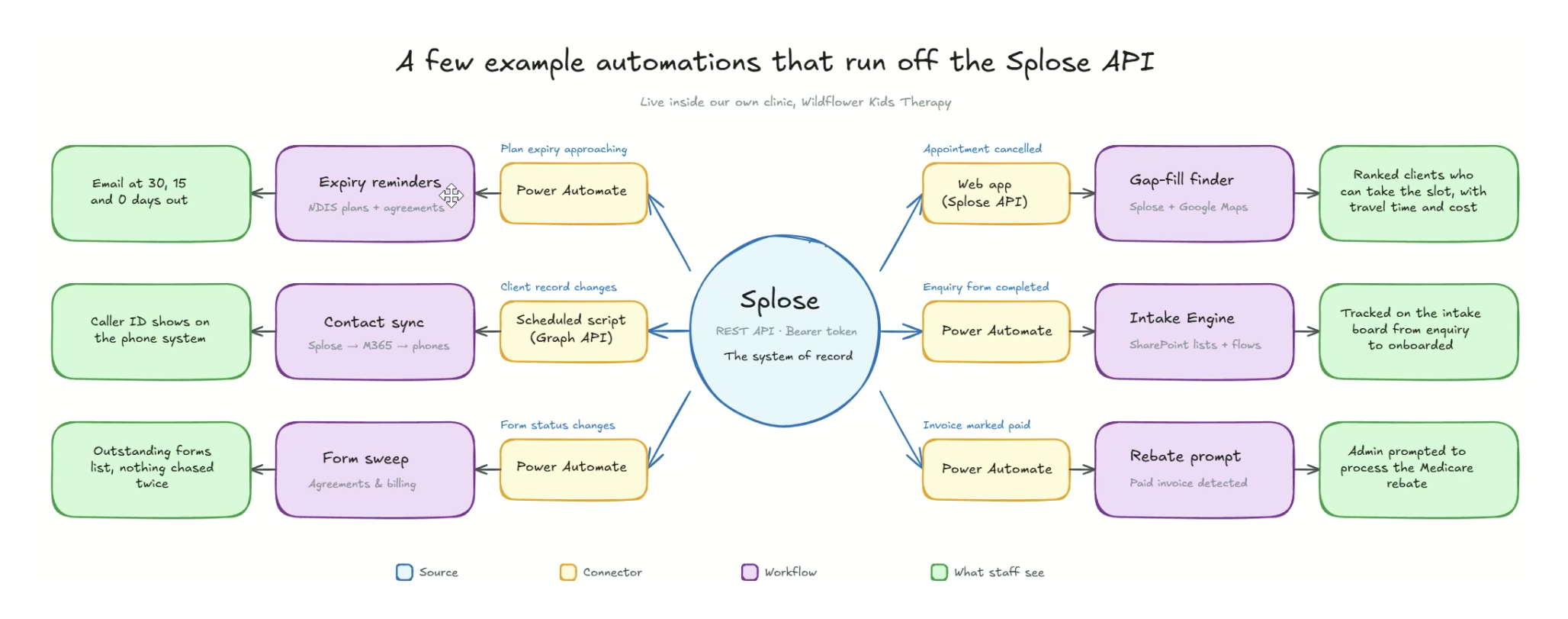
Compliance and plan follow-ups. Splose already reminds the team when a plan is coming up for renewal. Ours goes a step further. Each morning, an automation reads Splose for compliance and plan dates due, pulls the details and emails client and or clinician. Eg. Your plan's coming up, is it rolling over, is there anything you need from us, can you send the new one through when you have it etc. We used to have to remember to do plan follow-ups on a Monday. Now it just happens, and the family hears from us before anyone has to chase.
Who's calling. Contacts come out of Splose twice a day and land in Microsoft, which our phone system integrates with. When the phone rings, the screen says who it is. Nobody guesses, nobody creates a contact by hand, and the person answering can say "Oh hi Jenny, how've you been" instead of "can I get your name".
Filling a gap in the car. This is the one we couldn't do at all before. A small web app pulls the day's appointments out of Splose, works out where each clinician physically is from the travel address on the booking, and asks Google Maps how long it takes to get from there to anywhere else. So when a parent rings and says we'd love a school session in Nerang, Wednesdays only, fortnightly, we can ask it who could actually get there in the time available, based on where they already are before and after. Splose doesn't know how long a drive takes. Now something beside it does, and a two hour gap becomes a list of people who could fill it.
Enquiries that keep moving. A website enquiry used to be an email that somebody had to turn into a contact. Now it lands on the intake board with the Splose record already made, and nothing sits between an enquiry and a first appointment waiting for someone to remember it.
Medicare rebates. When an invoice is marked paid in Splose, admin gets a prompt to process the rebate. The step still needs a person. The remembering doesn't.
Forms that never came back. A sweep of agreements and billing forms that were sent and not completed, so there's one outstanding list and nobody chases the same family twice.
None of these are big. That's the point. Each one took a repeated job that started with something Splose already knew, and moved it off a person. The clinics I've spoken with about this sit everywhere on the scale. A few have built detailed things. Plenty use it for one job, updating a spreadsheet. That sounds small, and it is. It's also somebody's afternoon.
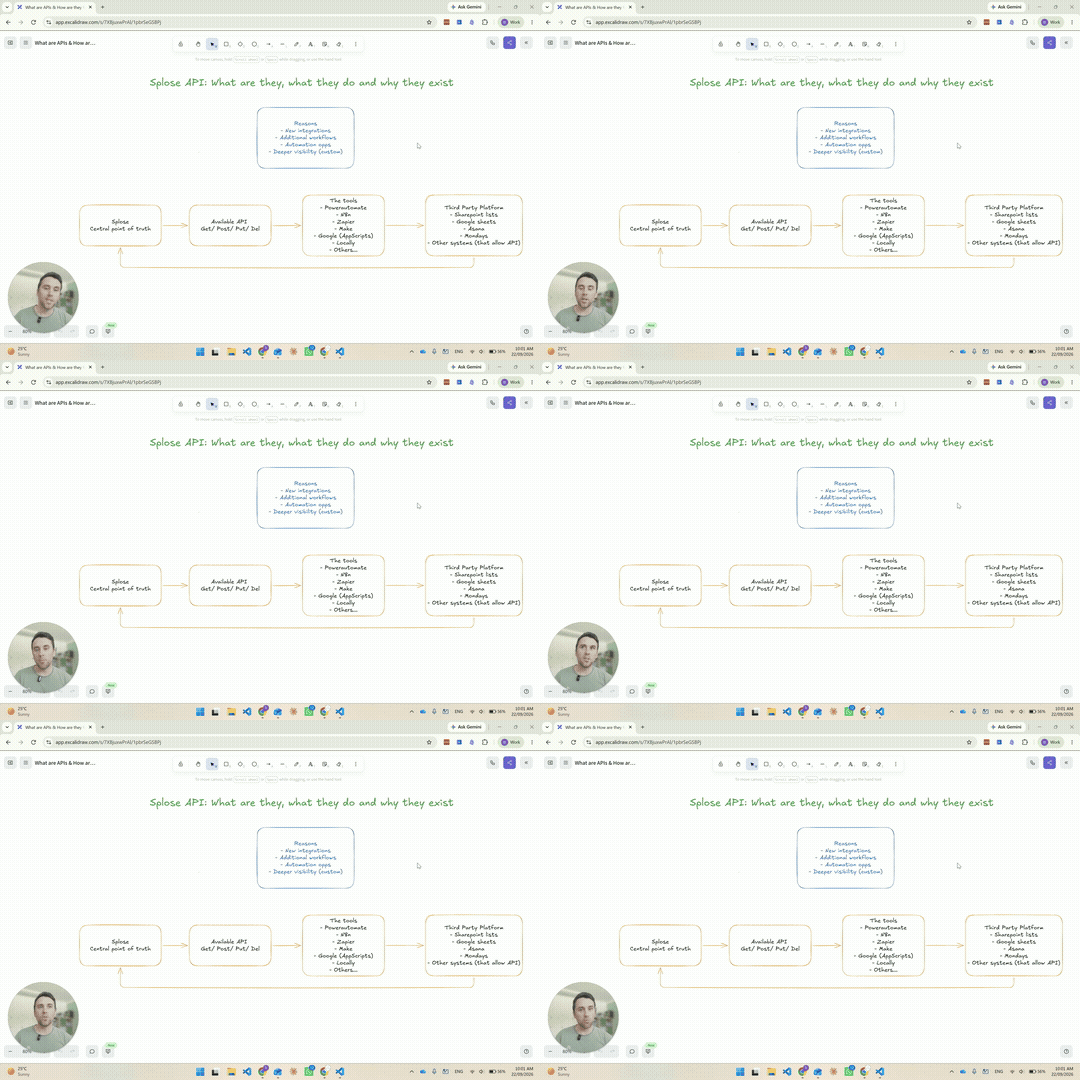
A side comment... A little window popped up on my screen while I was recording, a script running on my laptop, and I couldn't have told you what it was pulling. But I know what outcome it achieves, and that's what matters.
What are you doing by hand between your systems?
That's the question, and it doesn't need the word API in it.
Somewhere in your clinic, somebody is moving information from one system to another by hand. You may not have noticed, because it's been that way since the systems arrived and it only takes a minute.
The website form that somebody re-types into Splose, field by field, then adds to the waitlist. The report that gets exported as a CSV, tidied up and turned into a chart in Excel once a month by whoever remembers. The spreadsheet that gets updated every Friday from things Splose already knows. The contact created by hand because the phone system doesn't know who's calling. Each of those is a person acting as the cable between two systems that could be talking to each other.
Exporting the CSV and making the chart is totally fine, nothing wrong with it at all. But the same raw data Splose uses to build its own reports is available to be pulled out on its own, into a sheet or a dashboard, as close to live as you need. The form could be creating the contact the moment it's submitted. The real cost of doing it by hand isn't the ninety seconds. It's that somebody has to stop what they were doing and shift their attention to it, every time.
What it takes
Splose's door doesn't do anything on its own. Something has to knock, ask for the information and take it somewhere. In our clinic that's mostly Power Automate, because we already live in Microsoft. Others use n8n, Zapier or Make. Google has Apps Script. It can also be a small script on your own computer, with the catch that your computer has to be on.
Something has to be built, then somebody has to mind it. So the jobs worth doing this to are the ones that happen every day or every week, land on a real person, and cost them a shift of attention every time. You don't need to know which tool. You need to know which jobs.
Do this over a week
- For one week, every time somebody moves information from one system to another by hand, write down what it was, where it came from and where it went.
- At the end of the week, circle anything that happened more than twice.
- For each circled platform, search its name and the word API. If it has one, it can talk to Splose.
- Pick the one that happens most and costs the most attention. Not the most impressive one, the most frequent one.
- That's the conversation to have with whoever builds these for you, whether that's someone on your team, a friend who's good with this, or a person like me.